Wellbeing / Research-based guide
Flat vs Contoured Sleep Masks: What to Compare
By Asian Beauty Finder · Updated October 29, 2026 · Research-based editorial
In this guide
Quick answer: Compare a flat sleep mask with a contoured one by where the fabric and edges touch your face—not by the word “blackout.” A flat design is worth considering if you want a simple, compact shape. A contoured design is worth considering if eyelid clearance matters more. Neither shape guarantees comfort or a light-free fit on your face.
This is a research-based comparison of designs, not a hands-on ranking or a recommendation to buy a specific model. The fit-check sequence below is our editorial decision aid.
Flat versus contoured: compare the contact points
| Decision | Flat design | Contoured design |
|---|---|---|
| Contact near the eyes | Fabric lies across the eye area; check whether that contact feels acceptable. | A shaped cavity creates space; check whether its depth and position suit your face. |
| Against a pillow | A low-profile edge may be useful, but the strap or buckle can still press. | Check whether the outer edge catches or shifts when you turn onto your side. |
| Packing | Check how the maker permits folding and storage. | Check whether the formed shape needs protection from being crushed. |
| Adjustment | Look at strap length and closure placement. | Check both strap adjustment and whether the cups move independently. |
| Cleaning | Follow the exact model’s care label. | Follow the exact model’s care label, including any separate components. |
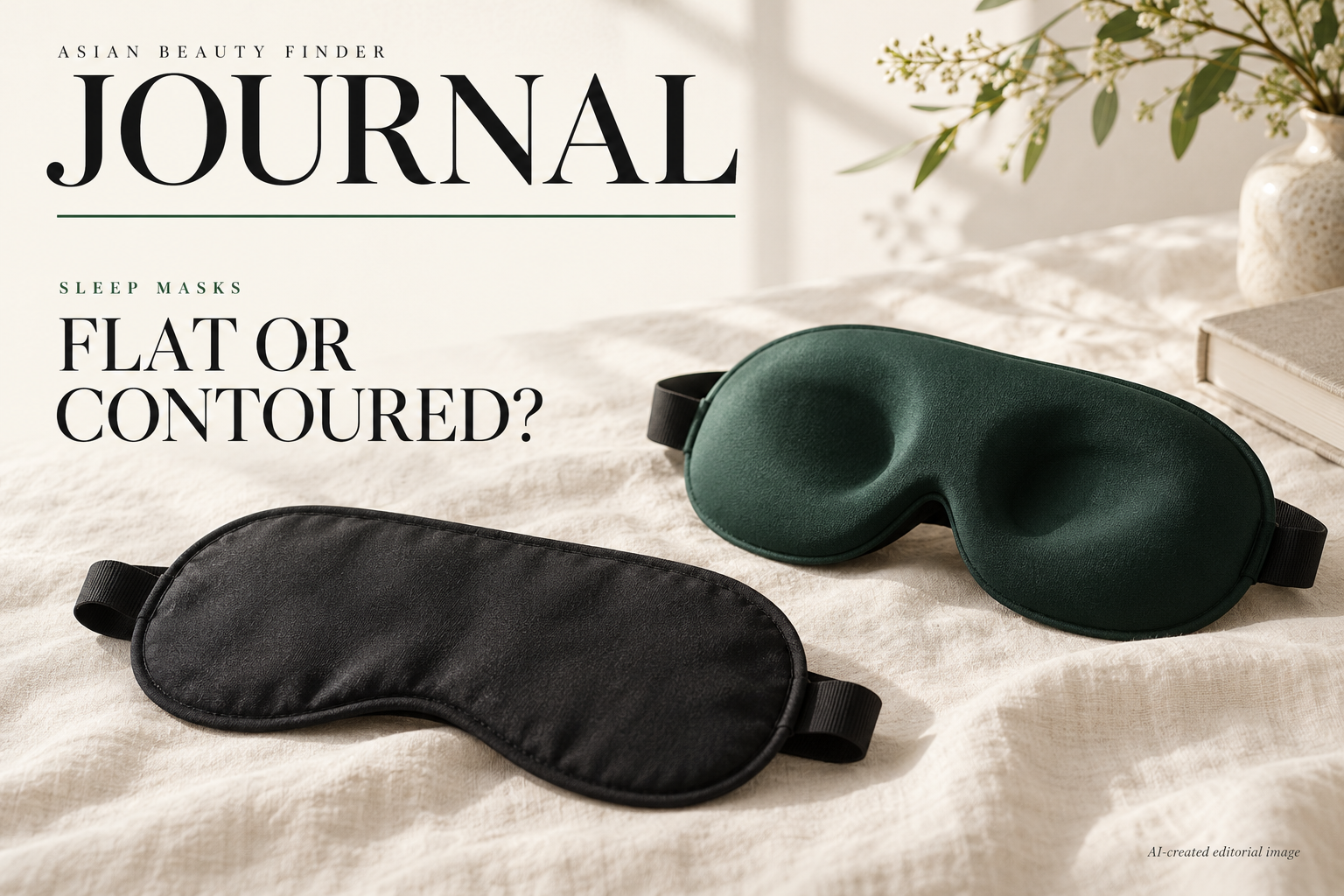
These are questions to test, not measured advantages of every mask in a category. “Contoured” can describe a molded shell or separate cups. “Silk” describes a fibre, not the shape. Compare the actual construction shown in the listing.
A short fit check in your usual resting position
- Check return eligibility before trying it on. Read any hygiene, packaging and final-sale exclusions. Keep the packaging until you have decided.
- Start with a comfortable adjustment. With clean hands, fit the mask according to its instructions. Do not keep tightening it to compensate for an unsuitable shape.
- Check the nose and temples. Notice whether light enters at an edge and whether repositioning helps. A dark fabric colour alone does not answer this.
- Use your usual pillow. Turn into the position in which you normally rest. Notice edge pressure, strap placement and movement. A comfortable upright fit is only part of the decision.
- Stop if it feels uncomfortable. A persistent pressure point is a reason to reassess the fit, not a reason to accept a tighter strap.
For example, if a contoured mask feels fine sitting up but shifts against your pillow, compare its edge profile and strap placement before assuming you need deeper cups. If a flat design touches your eyelids in a way you dislike, compare a design with clearance rather than buying another fabric colour.
Care instructions can decide between two otherwise suitable options
Two manufacturer examples show why shape alone is not enough. Slip’s care page gives different washing temperatures for its standard and contour sleep masks; both are hand-wash products, with shade air-drying and no tumble drying. Manta’s Original mask instructions permit cold machine washing in a mesh bag and flat air-drying. Those instructions apply to the named models, not every silk or contoured mask.
Before choosing, write down how you will wash and fully dry the exact item. If you cannot follow its care instructions during a trip, that may outweigh a feature you like. These examples illustrate a maintenance difference; we have not verified a purchase option for your country or tested either product.
When neither design is the right next purchase
If moving a lamp or adjusting a curtain solves the unwanted-light problem, try that first. If your current mask fits comfortably and can be cared for as instructed, changing its shape may not address anything you need. Read our sleep-space checklist before shopping.
A sleep mask is an accessory, not a treatment for persistent sleep difficulties. The CDC advises talking to a healthcare provider about problems sleeping. Its guidance does not endorse the models or comparison in this article.
Before paying: make the comparison specific
Confirm the model name, composition, dimensions, adjustment, washing method and current stock. Then compare delivery to your country and the return terms of the seller you will actually use. Do not assume a brand’s direct-store policy applies to another retailer. Our sleep-mask buying checklist covers the broader purchase decision.
Sources, review date and disclosure
Sources checked 29 October 2026: Slip care instructions, Manta FAQs and Original care instructions, and CDC: About Sleep. Product care information is manufacturer-reported. Our comparison and fit-check sequence are editorial guidance, not laboratory or clinical findings.
Commercial disclosure: No sponsorship or affiliate links. We have not tested the masks. The AI-created editorial image depicts generic designs, not the named products or a verified performance result.