Beauty / Research-based guide
Wet or Partly Dry? A Gentler Detangling Plan for Different Hair Types
By Asian Beauty Finder · Updated October 28, 2026 · Research-based editorial
In this guide
Detangling timing depends on hair texture. Match the method to your hair and avoid forcing a tool through resistance simply to finish faster.
What the evidence supports
AAD distinguishes straight hair, which it advises allowing to dry a little before gentle combing, from textured hair or tight curls, which it advises combing while damp with a wide-tooth comb. Its guidance does not support one brushing rule for everyone.
A practical plan
- Identify the ordinary situation: after washing, after a windy journey or before a salon visit. Do not treat every tangle as the same task.
- Check your existing comb for rough or broken teeth. A tool that catches hair is a reason to reassess it, not to use more force.
- Choose a time when you can work patiently. If a particular section resists, pause rather than pull harder.
- For a cut with specific preparation requirements, ask the salon whether to arrive with hair in its usual pattern and how they want it prepared.
Compare the choices
| Situation | Useful next step | Trade-off |
|---|---|---|
| Straight hair after washing | Allow some drying before gentle combing | Do not apply a curly-hair routine automatically |
| Textured hair or tight curls | Use the appropriate damp-hair approach | Technique still matters |
| Severe tangling or matting | Ask a suitable professional for help | A quick home fix may be unsuitable |
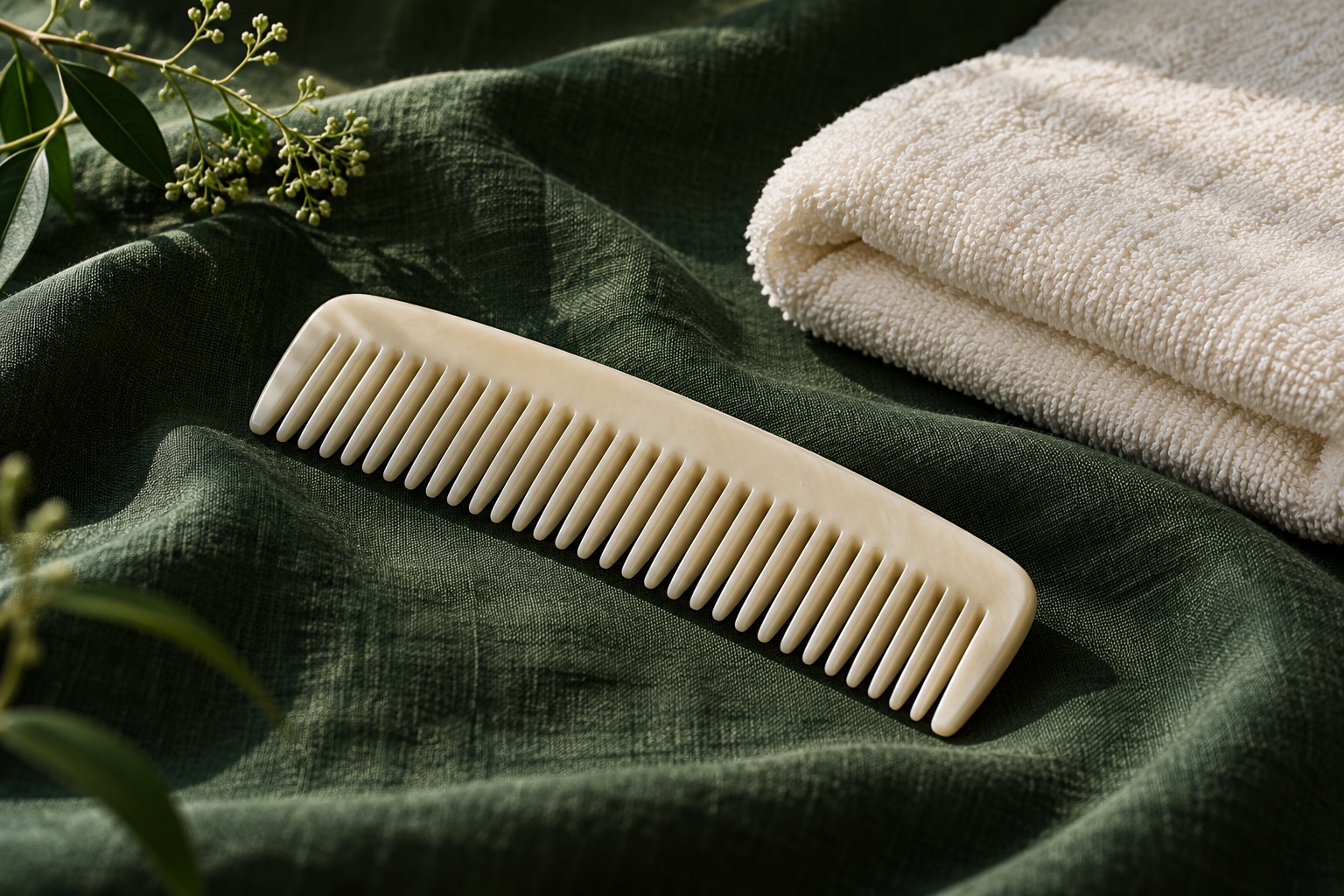
Before buying a specialist brush, name the problem your current tool cannot solve. A wide-tooth comb you already own may be adequate if it is in good condition and appropriate for your hair. A stylist demonstration can be more useful than a product collection: ask them to show the pressure and timing they recommend for your own routine.
When to pause
Do not continue through scalp pain or try to cut out unseen tangles close to the scalp. This guide does not cover detangling extensions, fragile post-treatment hair or medical scalp problems; those may require specific advice.
Sources and disclosure
Research-based guide. Checked 28 October 2026: AAD: Hair-care habits that can damage hair. The planning examples and comparisons are editorial suggestions, not clinical tests. This article has not been independently reviewed by a clinician.
Commercial disclosure: No sponsorship or affiliate links. We have not tested or endorsed a specific product. AI-created editorial images illustrate the subject; they are not photographs of a verified salon or treatment result.
Continue reading
Prepare a salon order card. Create and save a card as an image; it cannot guarantee translation accuracy or a service result.