Living / Research-based guide
How to Choose a Travel Jewelry Case for the Pieces You Actually Pack
By Asian Beauty Finder · Updated November 16, 2026 · Research-based editorial
In this guide
- Start with the pieces you will take
- Compare a box, a roll and separate pouches
- Check usable space, not just outside dimensions
- Give each jewelry type a workable place
- Keep jewelry care separate from case marketing
- Do a gentle packing check before departure
- Check purchase terms—or use what you own
- A simple arrival and departure routine
- Questions before you choose
Choose a travel jewelry case by matching its compartments to the pieces you will actually pack. Start with your largest or most awkward item, check how the case closes when filled, and give pieces separate storage where they could rub together. A small box, a fabric roll, or suitable pouches you already own may each work; the useful choice depends on your jewelry and the space in your bag.
This research-based guide offers a practical selection and packing checklist. We have not tested the cases sold by the retailers reviewed during our research. There are no affiliate links in this article. Jewelry-care sources were checked on November 16, 2026.
Start with the pieces you will take
Lay out your planned jewelry before browsing cases. Count pairs of earrings as pairs, and include the pieces you expect to wear on the journey: they may still need a place when you remove them. A case that fits only your spare accessories can leave you improvising at bedtime.
Make a short inventory with three columns: the item, the space it needs, and where it will go. For example, a pair of studs needs room for its posts and backs; a pendant needs room for both the chain and the pendant. A rigid bracelet cannot be treated as if it were a flexible chain. These are fit questions, not reasons to buy a larger organizer automatically.
- Everyday selection: list the pieces you genuinely expect to wear.
- Occasion pieces: add the specific accessories for a dinner, wedding, or other planned event.
- Leave-at-home selection: set aside anything you do not want to manage during this trip.
For a hypothetical weekend with two pairs of earrings and one ring, a large necklace panel may add little value. For a trip with several chains, the way each necklace is held matters more than a high total compartment count. Your inventory makes those differences visible before you spend money.
Compare a box, a roll and separate pouches
Choose a format that suits both your items and how you unpack. The comparison below describes layout tradeoffs to inspect; it does not guarantee that every case in a category performs the same way.
A structured box
A box gives you a defined interior to work with. Look for compartments that fit your particular pieces and a lid that closes without pressing on them. It may be convenient if you like to open everything on a table and see the available spaces at once. The tradeoff is a relatively fixed shape in your luggage. An attractive empty box is not necessarily roomy after its ring rows, dividers, and lid panel are filled.
A fabric roll or folding organizer
A roll or folding organizer is worth considering when you want separate pockets or a layout that opens flat. Check the space required to unfold it at your destination, as well as its packed size. Look closely at where the folds land: a chain, pendant, or earring post should not be forced across a fold. A flexible exterior alone is not evidence of impact protection.
Separate pouches or original packaging
Individual packaging can let you bring only the storage you need. It also creates more small units to keep track of. Decide how you will gather those units in one consistent place without pushing the contents together. GIA identifies a jewelry piece’s original box or pouch as a useful storage option; check that yours is clean, intact, and still suitable for that piece. A soft pouch is not a substitute for rigid support when your item needs it.
Check usable space, not just outside dimensions
External measurements tell you whether a case may fit in a bag. They do not tell you whether your jewelry fits inside. Padding, dividers, rounded corners, and a filled lid all use space. Ask for interior measurements if the product page gives only the outside dimensions.
Start with the item most likely to cause a problem: perhaps a wide cuff, a large pendant, or a watch. Compare its shape with the actual compartment rather than the overall case. If the seller shows a removable divider, establish what storage you lose when that divider comes out. A watch and a ring insert may compete for the same space.
For online shopping, draw the stated external footprint on paper and place it beside the bag you intend to use. This is a size comparison, not proof of interior fit. Keep your inventory alongside it and mark any item whose compartment remains unclear. One unanswered fit question is a good reason to ask the seller for a measurement before ordering.
When you can inspect a case in person, look at it closed and open. Check whether you can reach small items without emptying unrelated compartments, and whether the lining or fastening catches on the jewelry. Do not force a piece into a slot to make a promising case work.
Give each jewelry type a workable place
Look for a clear storage plan for each item instead of treating all pockets as interchangeable. Use these questions while comparing a travel jewelry organizer:
- Necklaces: Where does each chain go after its clasp or loop is secured? Can separate chains reach the same open pocket? Is there room for the pendant without folding or pulling the chain?
- Earrings: Can you fit the posts and backs without pressing them into the opposite panel? Is there a suitable compartment for hoops or drop earrings that do not fit a stud panel?
- Rings: Does the setting clear the lid? Can you remove one ring without pulling neighboring pieces out?
- Watches and bracelets: Is the compartment compatible with their shape, including any support the maker recommends? Does using it remove space you had assigned elsewhere?
A photo showing every holder filled is useful only if the pictured items resemble what you carry. Check whether the photographed layout can also close. A case may advertise many slots while leaving little room for an unusually shaped piece.
If you cannot give one item a sensible place, change the layout, use suitable separate packaging, or reconsider bringing it. Avoid placing a loose extra on top of an otherwise well-organized selection simply because the zipper still closes.
Keep jewelry care separate from case marketing
A travel case does not make every storage material suitable for every gem. GIA advises protecting jewelry from scratches and impact with padding and separate storage. It also notes that chemicals in perfume, hairspray, lotion, and other cosmetics can damage some jewelry materials. Keep your jewelry away from those products while getting ready. Read GIA’s jewelry-care guidance.
Pearls need particular care. GIA’s travel guidance recommends keeping them separate from other jewelry in a soft cloth or breathable pouch and avoiding plastic storage. Follow the care instructions for your own pieces, especially if you do not know their materials or treatments. Ask your jeweler about an unfamiliar lining or storage accessory rather than assuming a general “protective” label covers it. See GIA’s guidance on traveling with jewelry.
For a practical getting-ready setup, keep the jewelry case in a separate place from your open toiletries. Finish using cosmetics before putting on delicate jewelry. This article addresses packing choices; it does not provide a universal cleaning method or a guarantee against damage.
Do a gentle packing check before departure
Try the planned arrangement at home, while you still have time to change it. Use a clean, clear surface and handle each piece according to its care instructions. There is no need to shake, drop, or squeeze a packed case to test it.
- Assign each item. Place the selected pieces into their intended holders or separate packaging. Keep the inventory beside you.
- Inspect the edges. Look for chains, posts, clasps, or fabric caught near a fold, hinge, snap, or zipper.
- Close it normally. Stop if the closure needs force or the lid presses against a piece. Remove the obstruction and reconsider the arrangement.
- Open and inspect. Check that the storage plan still makes sense and that you can remove each piece without snagging another.
- Check the bag placement. Confirm the case fits in the space you reserved without needing to compress it under other packed objects.
This check can reveal obvious fit problems; it does not certify protection during travel. If a layout works only when everything is positioned with unusual precision, consider whether you will want to repeat that process every morning. Easier access may matter more to you than fitting one additional accessory.
Check purchase terms—or use what you own
If you decide to buy, confirm the exact size and version before comparing prices. Similar names and photographs can refer to different interiors. Check the seller’s current listing for materials, measurements, included inserts, and care instructions. Then confirm availability and delivery to your destination; an estimated dispatch date is not an arrival date.
Read the return conditions before choosing personalization. Find out when the return period starts, whether return shipping or fees apply, and whether customized or final-sale items are excluded. Save the information relevant to the version you order. A general brand policy may not cover every seller or shipping country.
Buying is optional. First compare your inventory with the original boxes or pouches you already have. Reuse appropriate packaging when it provides the support and separation your pieces need. If that arrangement is bulky, try reducing the selection before replacing all the packaging. The goal is a manageable travel setup, not a complete miniature version of your jewelry storage at home.
A simple arrival and departure routine
Choose one clear place to open the case at your accommodation, away from the sink and your cosmetics. Put removed pieces back in their assigned spaces instead of spreading them across several surfaces. An organizer is useful for keeping track of items, but it is not a security device.
Before leaving, compare the contents with your inventory and check the place where you got ready. Count the pieces you are wearing as well as those packed. If you keep separate pouches inside another bag, count those too. A short list is easier to use consistently than a packing arrangement you cannot remember.
Keep the rest of your routine similarly focused. Our guide to building a travel care kit around your actual routine helps you decide what belongs alongside your jewelry. If a case’s built-in mirror is influencing your choice, first consider whether you need a travel mirror at all.
Questions before you choose
Is a hard or soft jewelry case better?
Neither format is automatically better. Compare the usable compartments, support, closure, and packed size for your selection. Exterior appearance alone does not establish protection.
How small can a travel jewelry case be?
Small enough to hold your chosen pieces without pressure or unsuitable contact. Start with your largest item, then account for the other pieces and their separate storage.
Do I need a new case for a short trip?
Not necessarily. Suitable original packaging may be enough. Lay out your selection, check the fit, and buy only if your current arrangement leaves a specific problem unresolved.
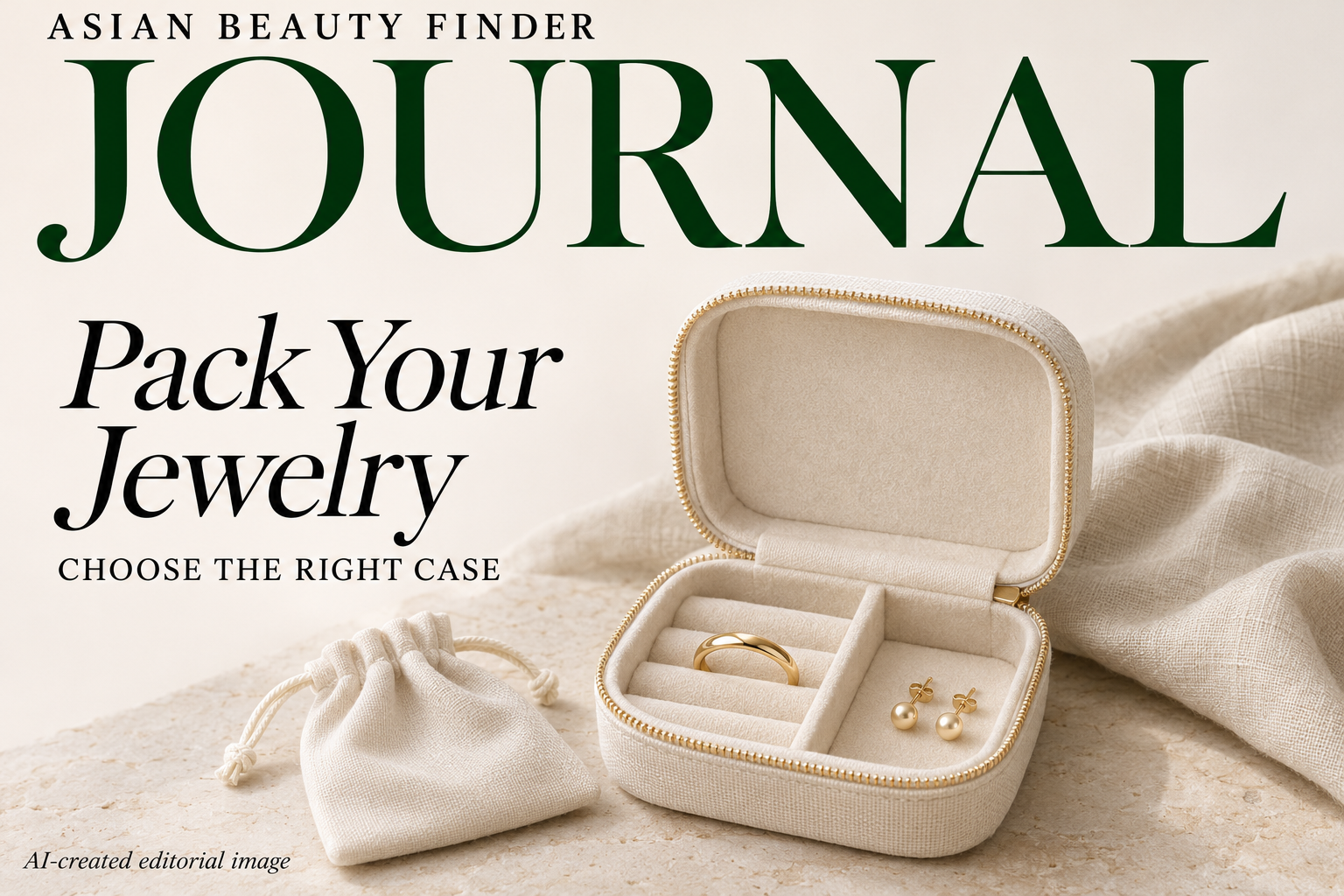
Images: AI-created editorial images of an invented setting and generic storage accessories, not photographs of tested products.