Living / Research-based guide
Travel Soap Case: Choose for Wet Packing and Easy Drying
By Asian Beauty Finder · Updated November 19, 2026 · Research-based editorial
In this guide
- Start with your departure routine
- Compare what happens when the lid is closed
- Measure the bar and rehearse the closure
- What two manufacturer descriptions reveal
- A checkout-to-arrival packing routine
- Choose a shampoo bar travel case around your own bars
- When keeping your current container makes sense
- Clean, dry and check before the next trip
- Quick questions
- Before you pack
- Sources
Choose a travel soap case for two separate jobs: containing a damp bar while you move and giving it a place to drain when you arrive. Start with the size of your own bar, the closure instructions and how soon you must pack after washing. A lid, drainage insert or fabric pouch does not, by itself, prove that a container will keep water inside.
This research-based guide uses manufacturer instructions to explain those differences. It is not a hands-on product test or a ranking of the best cases. Product links are ordinary source links, not affiliate links. Information checked November 19, 2026.
Start with your departure routine
Think about the morning you leave, rather than the photograph of a neatly packed toiletry bag. Will your bar have time to dry before checkout? Will you unpack it again that evening, or carry it through several stops? Those answers help you decide how much attention to give the closure.
For a week in one hotel, an existing container may be enough if it fits the bar and you can set up a separate drying place. For a trip with a new room every night, a closure you can reliably use with damp hands becomes a more important feature. Neither itinerary automatically requires an expensive case.
Write down three things before shopping: the bars you actually use, when you last expect to wash before leaving, and where you will put them after arrival. If you are considering leaving some toiletries at home, first confirm what your accommodation provides. A case solves a packing problem; it is not a reason to change a routine that already works for you.
Compare what happens when the lid is closed
A useful comparison separates the container’s transport function from its bathroom function. Look past broad words such as “travel,” “portable” and “soap saver.” Read how the particular design is meant to close, drain and be cleaned.
- A rigid box: inspect its lid, seal and instructions. A box may keep the bar apart from other items, but an ordinary closed box should not be assumed to dry a wet bar.
- A dish with an insert: examine where water collects below the bar and how you empty it. A removable tray or sponge adds a part that needs cleaning. Drainage inside a case does not establish that the outer lid is watertight.
- A specialized soap pouch: check the manufacturer’s stated function and required closing method. A claim about one pouch’s material cannot be applied to an ordinary fabric bag.
- A container you already own: check the same fit, closure and care points. Its usefulness depends on its condition and design, not whether it was sold as a travel accessory.
The practical question is: “Where will the water go?” If the instructions do not answer that, treat leak containment as unconfirmed. Keep an uncertain container separate from items that would be damaged by moisture.
Measure the bar and rehearse the closure
Measure the length, width and thickness of the bar you intend to take. If you are buying a replacement bar before departure, use its full size for the comparison. A case that fits a worn-down sliver may not fit the next bar.
Then distinguish the case’s outer dimensions from its usable interior. Rounded corners, a raised insert and the underside of a lid can all reduce the space available. For a roll-top pouch, the space required to close the top also matters. Do not assume that the published overall length is entirely available for soap.
Before leaving, place your actual bar in the case and close it according to the instructions. Check that you can release the latch or buckle, retrieve the bar without forcing it and put any insert back correctly. Try this over a sink, away from your packed belongings. This is a basic fit and handling check, not proof of leak resistance under luggage pressure.
If a seller lists only outer measurements, ask for usable dimensions before buying a tight-fitting case. Allowing room to handle the bar is more useful than choosing a container solely because it looks smallest.
What two manufacturer descriptions reveal
These examples show why the care notes matter. They illustrate different designs; they are not endorsements or a claim that either will suit every bar.
MUJI: drainage is not a seal
MUJI’s Portable Urethane Foam Soap Dish includes a sponge insert, but its instructions say the closed case is not fully sealed. MUJI tells users to drain it thoroughly before carrying it. That limitation matters more for wet packing than the presence of a lid.
The US page displayed $2.90 and an add-to-cart option when checked. Its listed dimensions are about 2.6 × 2.5 × 1.4 inches; do not treat those as confirmed interior clearance. Check current availability, delivery charges and the applicable return terms before ordering.
Matador: read the roll-top instructions
Matador describes its FlatPak Travel Soap Bar Case V2 as leakproof and designed to let a bar dry through the material. These are manufacturer claims, not results from our own testing. Its instructions require rolling the top at least three times and fastening the buckle.
Country settings affect the displayed currency. Consult the shipping policy and your checkout total rather than assuming a promotional shipping badge applies. The return policy also has conditions, including unused items and a deadline measured from the order date. Read the product’s current warnings and care information before purchase.
A checkout-to-arrival packing routine
Build the routine around your container’s instructions. The sequence below is an editorial packing checklist, not a tested promise that a bar will be dry by a particular time.
- Give the bar a draining place after use. Keep it out of pooled water while you finish getting ready. Do not add water to a case simply because it is described as suitable for wet soap.
- Empty collected water. Check beneath removable inserts and around the lid. Drain any loose water before packing, following the maker’s directions.
- Close the case deliberately. Seat the lid or seal, or complete the specified rolls and buckle fastening. Remove residue that interferes with the closure, using the recommended cleaning method.
- Separate it if containment is uncertain. A suitable intact secondary bag can provide another barrier, but it does not turn the inner case into a proven leakproof product or a drying system.
- Unpack at your next accommodation. Set up the bar’s drying place rather than leaving an ordinary closed container inside your toiletry bag until the next shower.
Put the case somewhere accessible enough to remember that last step. If your itinerary leaves it packed for a long stretch, consider whether using the bar earlier or taking a different familiar toiletry would be simpler.
Choose a shampoo bar travel case around your own bars
Start with the storage guidance for the shampoo or conditioner you use. “Solid” describes the format; it does not mean every bar has the same dimensions, firmness or care needs. A case marketed for body soap may not accommodate your hair-care bars comfortably.
Ethique’s storage guidance emphasizes drainage, airflow and keeping shampoo bars out of standing water between uses. That supports planning a drying place at your destination. It does not establish a universal drying time for every bar in every bathroom.
If you carry several similar-looking bars, decide how you will identify them before packing. Separate labeled containers or a clear record of which compartment holds which bar can help you avoid confusion. Check the combined fit with every insert in place; do not rely on a picture showing smaller or differently shaped bars.
Keep this decision connected to your actual routine. You do not need to add a conditioner bar, change shampoo or buy a coordinated set merely to fill the compartments of a travel case.
When keeping your current container makes sense
Try the container you already have before adding another purchase. The relevant questions are whether it fits, closes as intended, can be cleaned and works with a drying arrangement you will use. A familiar box with a sound closure may meet your needs better than a new design whose instructions do not suit your itinerary.
For a single-destination trip, you might use the container for the outward and return journeys and a separate draining dish during the stay. That is a reasonable setup to consider if the transport conditions are suitable. It is not evidence that every reused box is watertight.
A simple resealable bag may also be an option for temporary separation, depending on its condition and suitability for your toiletries. Inspect it, avoid overfilling it and remember to unpack. An ordinary closed bag is not equivalent to a specialized dry-through material.
Buy only if you can name the problem the new case addresses: insufficient usable space, a damaged closure, awkward handling or a mismatch with frequent wet packing. A different color or an extra accessory does not resolve those problems by itself.
Clean, dry and check before the next trip
Use the cleaning instructions for your specific case, including any separate guidance for its insert, seal or fabric. Do not assume that dishwasher use, boiling water or a strong bathroom cleaner is suitable for all materials.
MUJI, for example, specifies washing a dirty sponge with water, removing excess moisture and leaving it to dry. Its precautions exclude products such as chlorine bleach and alcohol. Those directions belong to that product; another case may require a different method.
After cleaning, inspect the parts you rely on: a cracked lid, distorted sealing edge, damaged buckle or torn pouch deserves attention before the next journey. Replace a damaged component if the manufacturer provides an appropriate replacement, or choose another suitable container. Do not rely on an improvised repair to establish a leakproof seal.
Let the case and removable parts dry as directed before putting them away. Keep the instructions or product link with your packing notes so the next trip does not begin with another search for care details.
Quick questions
Can I pack a bar while it is still damp?
Follow the bar and case instructions, remove loose water and use the required closure. If leak containment is unconfirmed, keep it separate from vulnerable belongings. Unpack for drying when you can.
Does an airtight case keep soap dry?
Airtight describes a closure, not a drying result. Do not assume an ordinary sealed container will dry a wet bar. Drainage and storage instructions still matter.
Is a fabric soap bag enough for travel?
Not automatically. A mesh or fabric bag intended for washing or hanging is not necessarily intended to contain moisture in luggage. Look for explicit transport instructions.
Before you pack
Measure your bar, check the usable space, rehearse the closure and decide where the bar will drain after arrival. If your existing setup handles those steps, you may not need to buy anything. For the rest of your bag, build a travel care kit around the routine you already use.
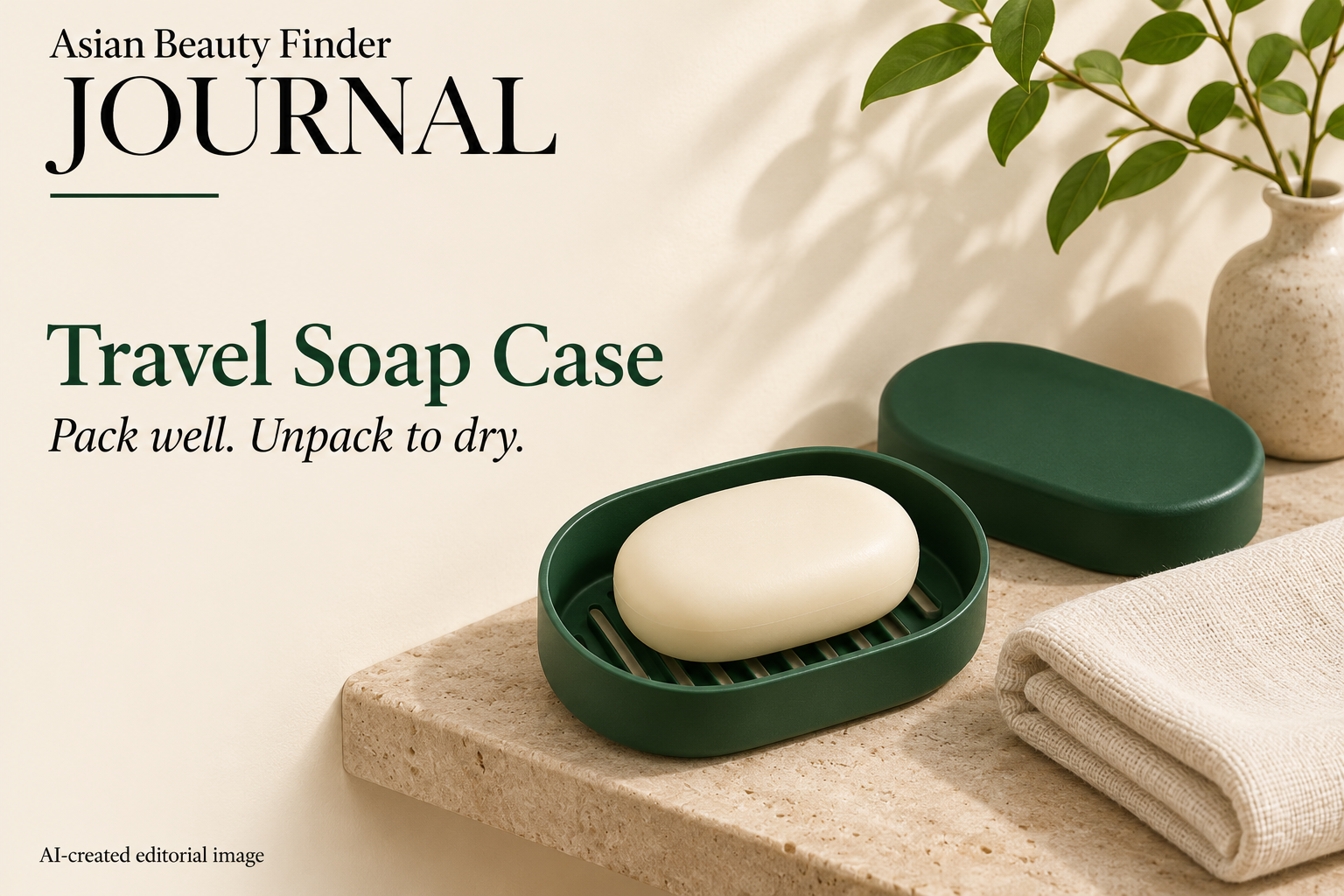
AI-created editorial images illustrate a generic container. They do not show either named product or a product test.